Portfolio Details
The Garage Service Management System is a digital platform designed to streamline and automate daily operations for small garage (motorcycle) service centers.
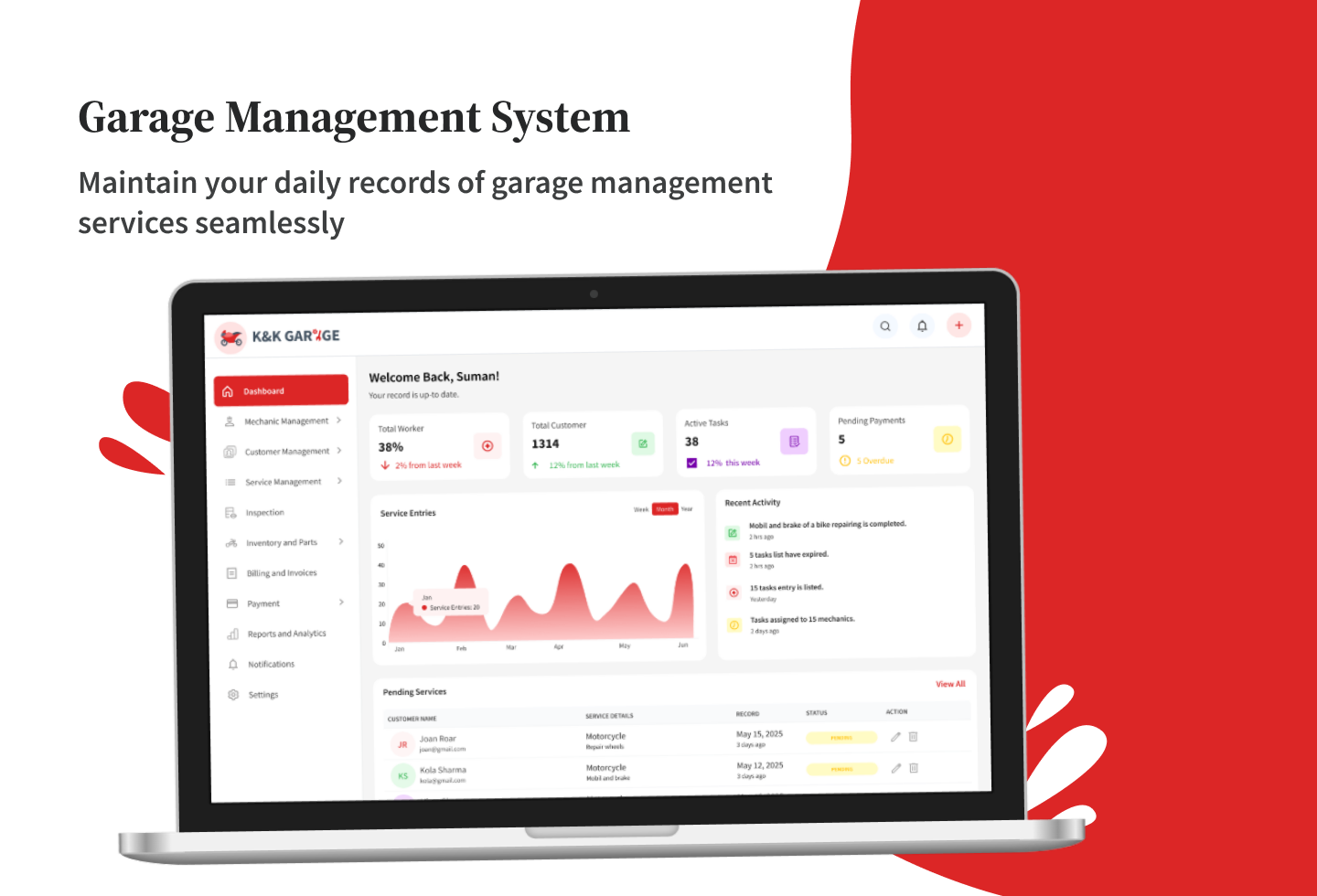
Garage Management System
Project Overview
The Motorcycle Garage Service Management System (Basic Plan) is a SaaS solution designed for small, single-location motorcycle garages that rely heavily on manual operations. The product focuses on digitizing essential daily activities such as job intake, worker assignment, service tracking, and billing without introducing complexity. The goal of the Basic Plan is to provide garage owners with a simple, affordable, and easy-to-adopt system that improves operational clarity, reduces errors, and brings structure to everyday service workflows.


Project Goal
The primary goal of the Basic Plan is to replace paper-based and verbal workflows with a clear digital process that can be adopted quickly by non-technical users. The system aims to simplify job creation, make worker assignments more organized, and provide visibility into service progress at any given time. Another key goal is to standardize billing and reduce calculation errors by introducing basic digital invoicing with VAT support. Overall, the product is designed to help small garages operate more efficiently without overwhelming staff with advanced features they may not need.
Design Process
Step 1: Discovery & Research
The project began with understanding the core business problems through client interviews and stakeholder discussions. Relevant questions were asked to identify operational pain points, user needs, and existing workflows. Quantitative and qualitative data were gathered to establish a clear foundation for design decisions.
1. What are the biggest challenges you currently face with your manual service workflow?
2. How do customers currently check the status of their motorcycle service?
3. What key outcomes do you expect from digitizing your service center?
4. Can you walk me through your current service workflow from customer drop-off to pickup?
5. How do you currently assign tasks to workers?
6. What specific user roles should the system have?
7. What information should be recorded when a customer brings in a motorcycle?
8. Do you follow a fixed service or inspection checklist?
9. How do workers communicate issues or extra parts needed during servicing?
10. How do you calculate billing currently?
Step 2: Define & Strategize
Before moving into visual design, user personas, user journeys, and empathy maps were created to deeply understand user behaviors, motivations, and challenges. Based on these insights, the problem statements were clearly defined and potential solutions were mapped to address the identified issues.

Problem Statement:
Service centers faced inefficient task tracking, frequent billing mistakes, and lack of operational transparency, leading to lost time, reduced productivity, and customer dissatisfaction.
Solutions:
1. Streamline job assignment and tracking for mechanics
2. Reduce manual errors in billing and service records
3. Provide admins with real-time operational visibility
4. Improve overall service turnaround time and accountability
Step 3: Structure & Explore
Flowcharts, information architecture, and low-fidelity paper wireframes were developed to outline system structure, screen hierarchy, and user flows. This phase focused on validating functionality and usability before visual styling.
INFORMATION ARCHITECTURE

FLOW CHART


Step 4: Design & Validate
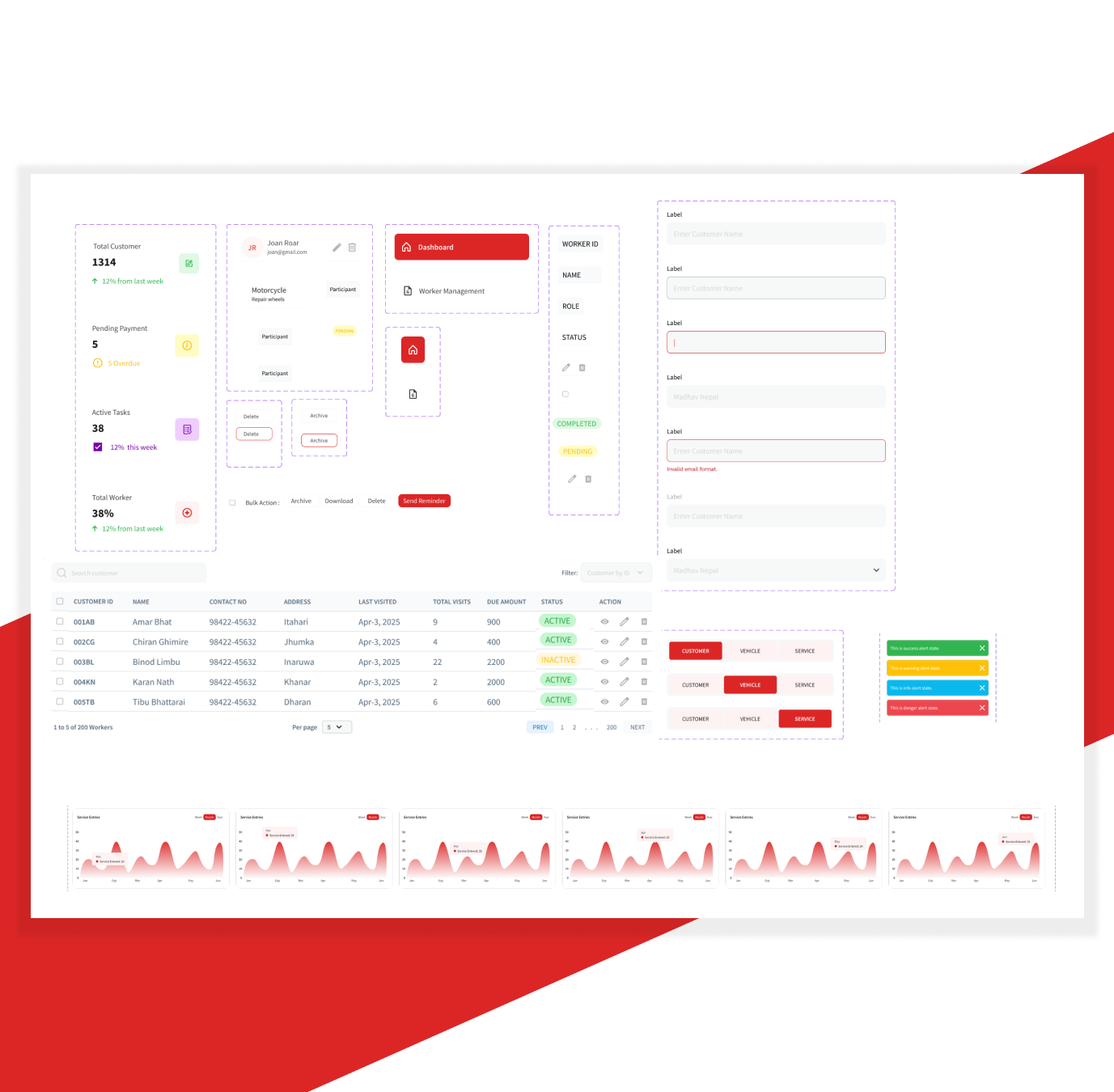
After approval of the wireframes by the project manager, a design system and style guide were established. High-fidelity wireframes were then created and presented to stakeholders. Feedback and suggestions were carefully documented for iteration.
STYLE GUIDE AND COMPONENTS
HIGH-FIDELITY WIREFRAMES
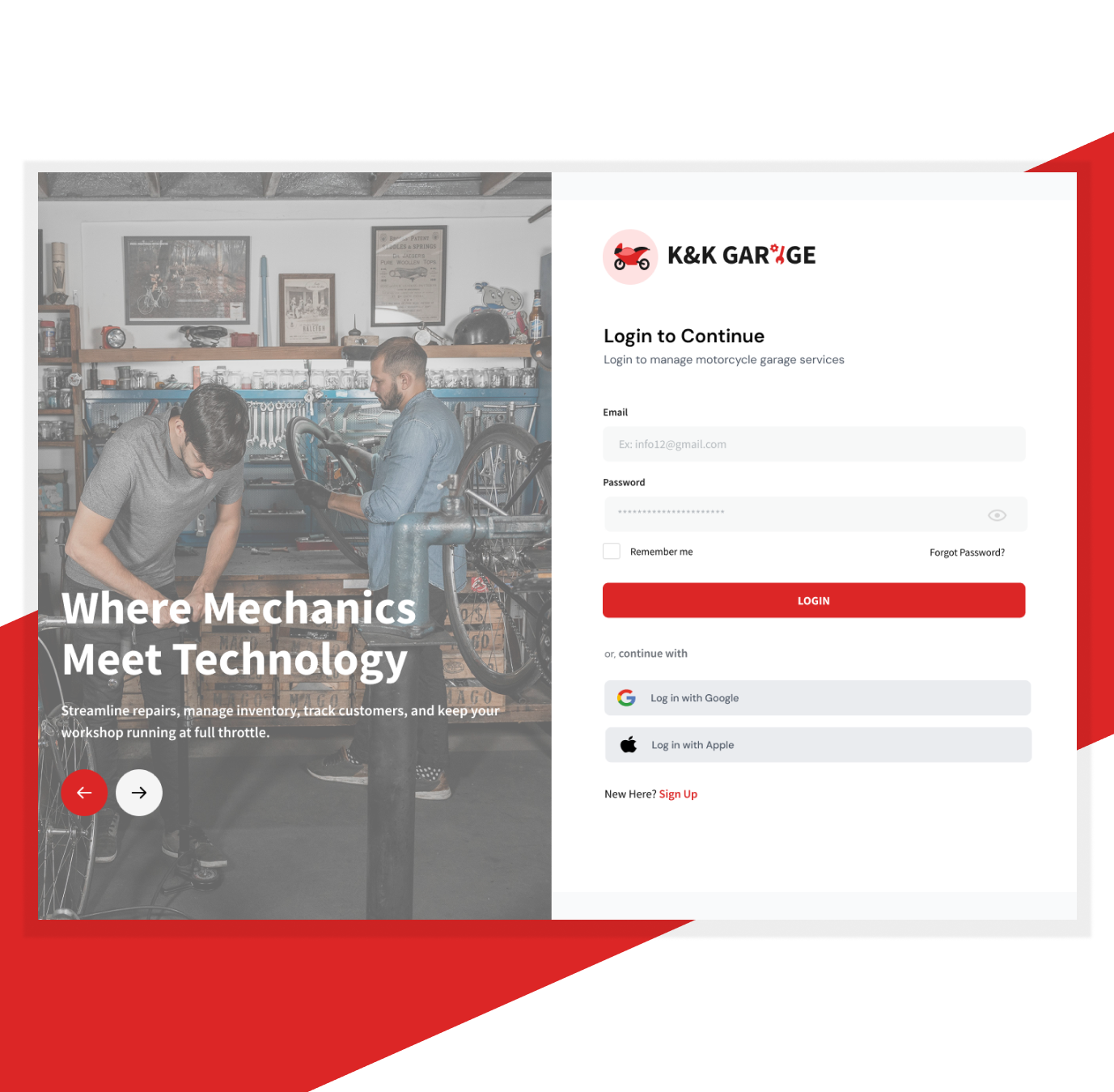
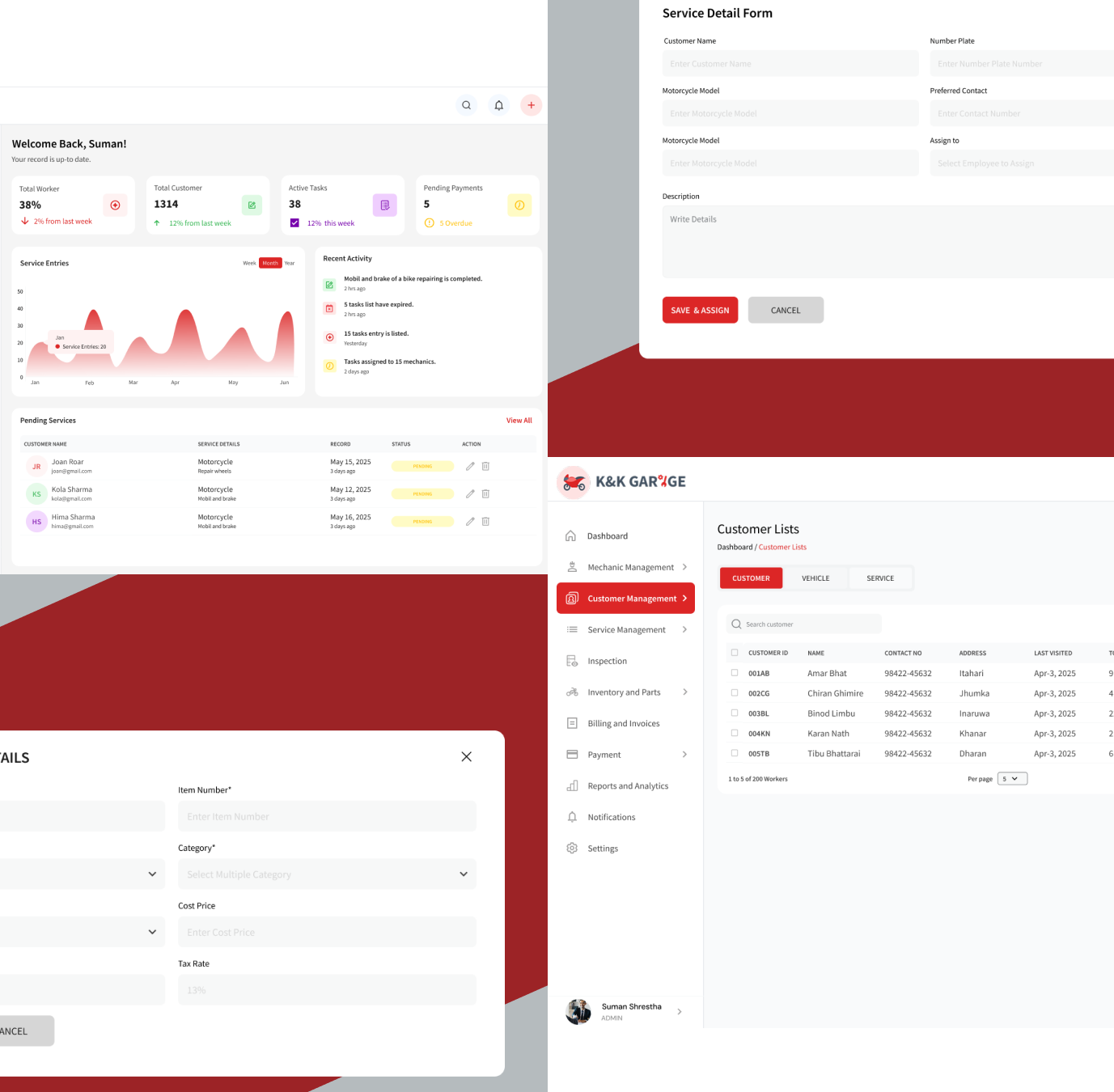
The below screens are after user login (i.e GARAGE OWNER) and with no real time data.
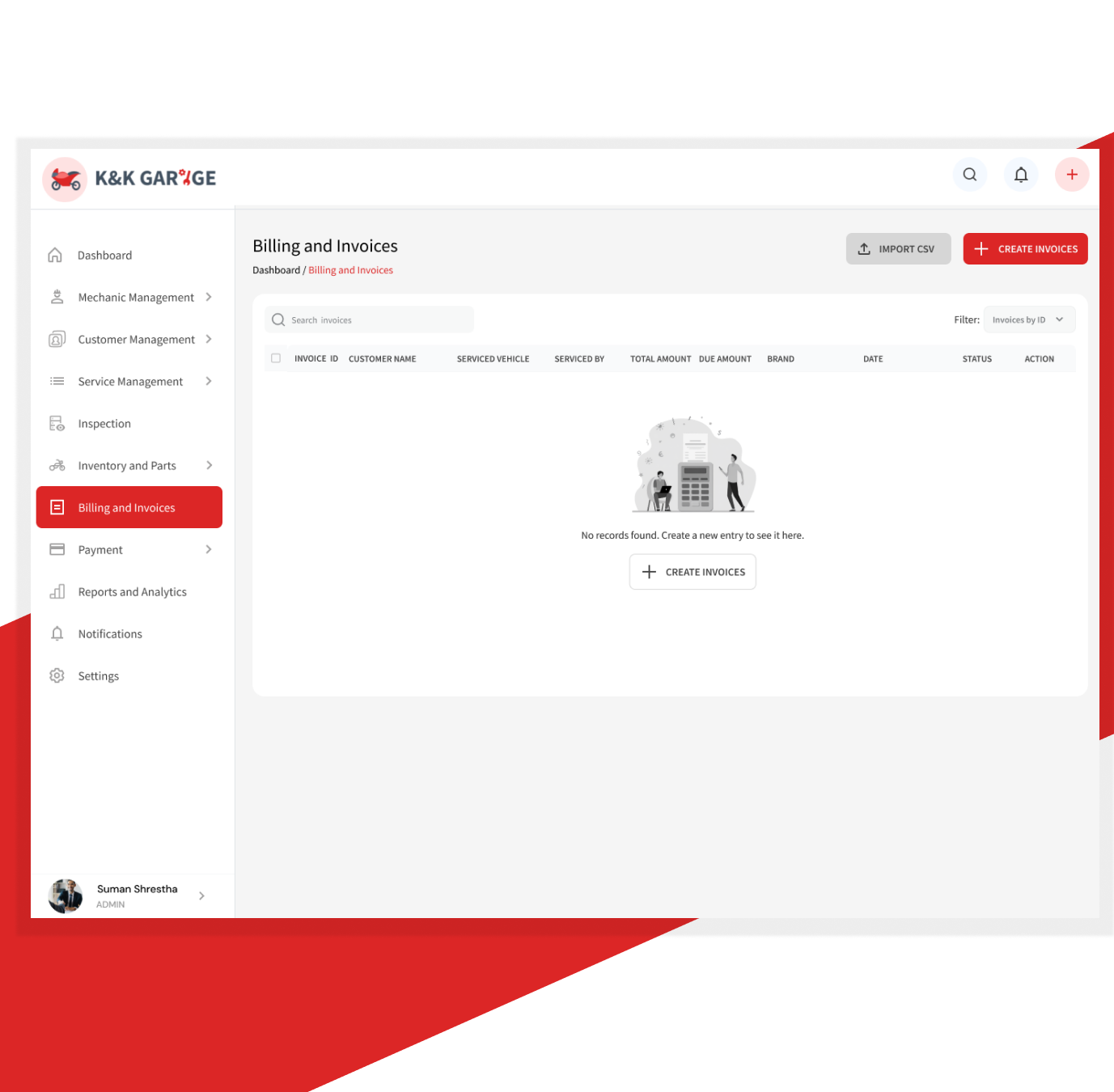
The below screens are after user login (i.e GARAGE OWNER) and real time data are added.
Step 5: Test & Iterate
Usuability Testing:
After the high fidelity design is completed,
1. I conduct moderated and unmoderated tests with target users.
2. Observed task completion and error points and update accordingly.
Step 6: Handoff & Measure
Final designs will be presented for internal validation and tested with real users to ensure usability and effectiveness. Once approved, designs are hand off to the development team with detailed documentation. Post-handoff follow-ups will also be carried out to monitor implementation quality and evaluate performance metrics.